
Modular System For Detecting, Tracking, And Transmitting To Identified Objects
Abstract
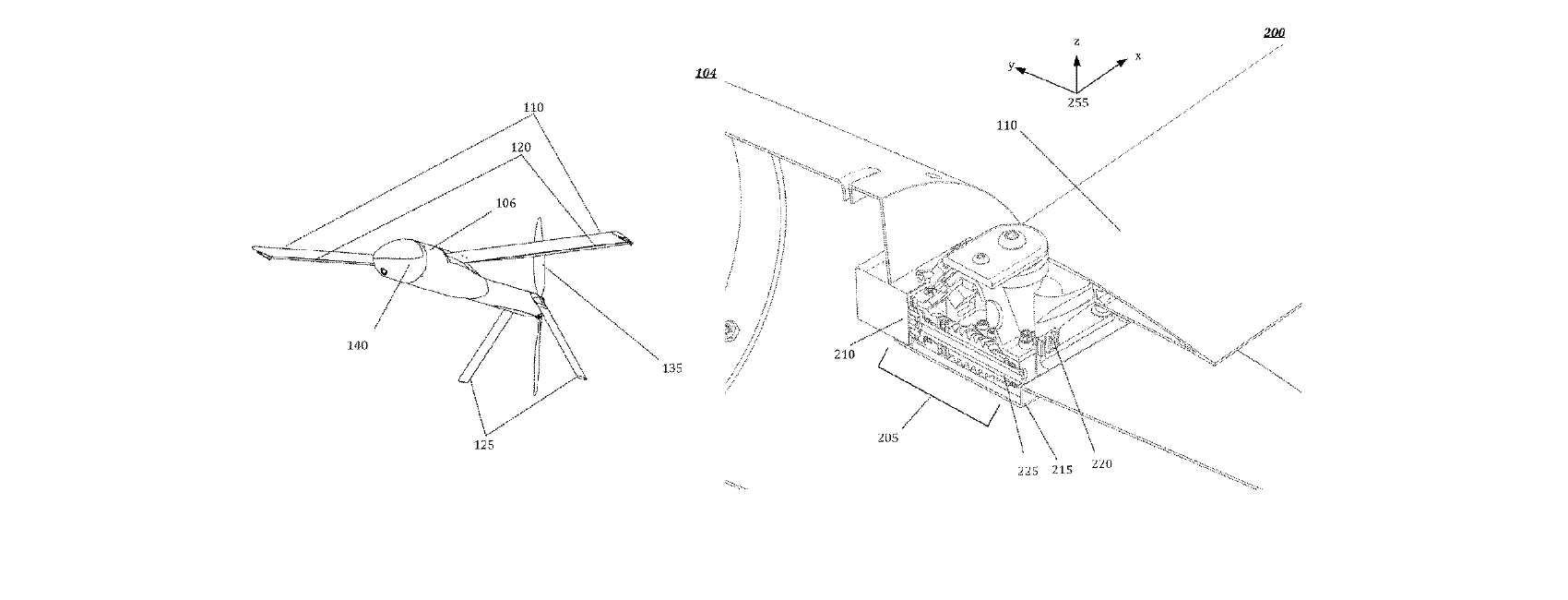
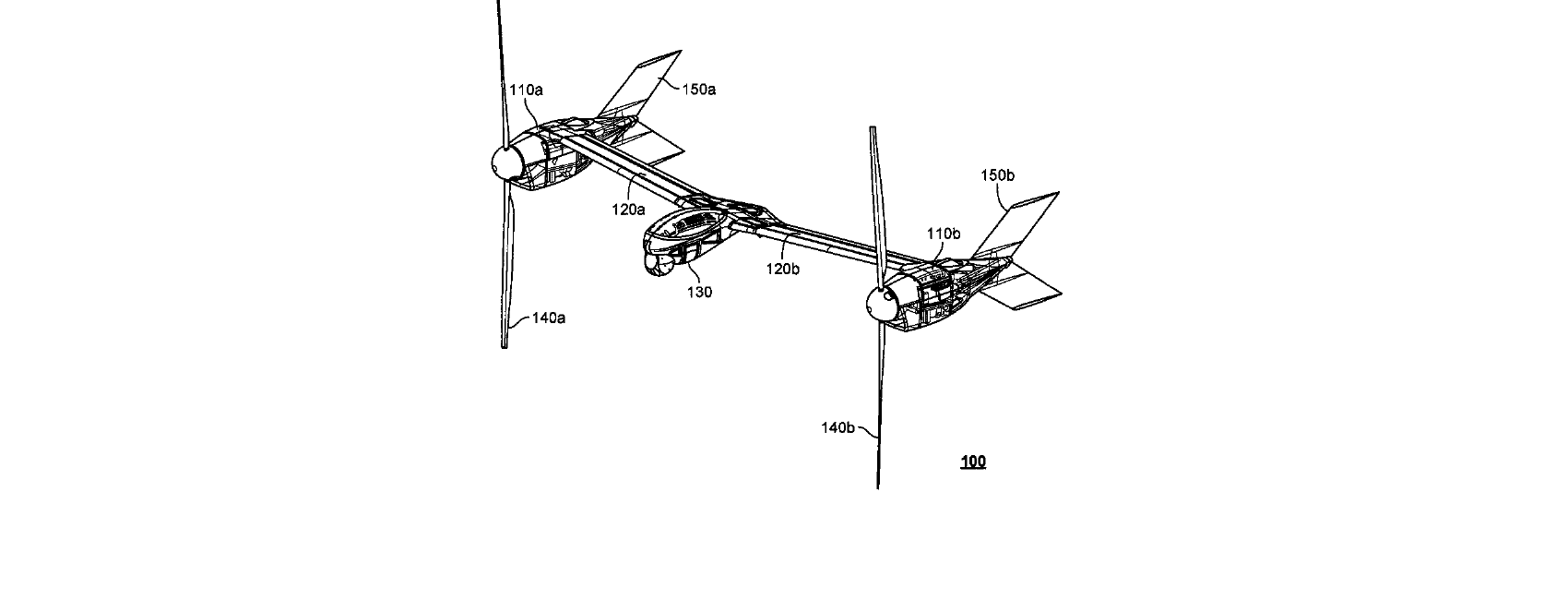
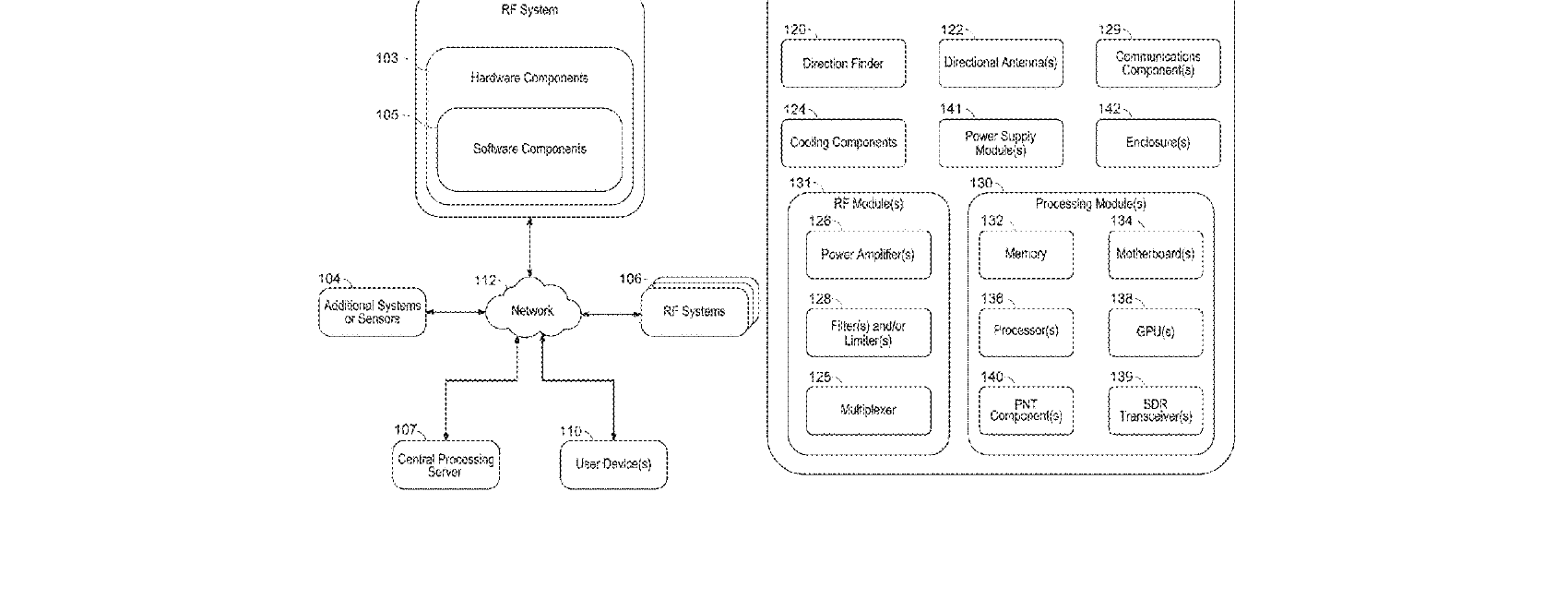
Modular System For Detecting, Tracking, And Transmitting To Identified Objects
US12568602

Anduril Industries is a Defense Autonomy company founded in 2017 and based in Costa Mesa, United States. It has raised $11.2B in total funding, most recently a Series H in 2026 at a $61B valuation.
 United States
| Date | Stage | Amount | Valuation | Lead investors |
|---|---|---|---|---|
| Jun 5, 2025 | Series G | $2.5B | $30.5B | Founders Fund |
Open operating system designed to bring autonomy and command & control to the tactical level, built as the core autonomy platform for Anduril's defense portfolio. Hardware-agnostic but purpose-built for autonomous systems management, emphasizing real-time sensor fusion, autonomous vehicle coordination, and edge-deployed machine autonomy with minimal human intervention. Enables teams of unmanned systems to autonomously collaborate across sea, land, and air — extending reach and situational awareness under a single human operator. Already demonstrated operational effectiveness in active deployments along the U.S. southern border, where it serves as the backbone for the Autonomous Surveillance Towers (ASTs) program, processing data from over 200 tower installations.
Autonomous vertical takeoff-and-landing (VTOL) small unmanned aircraft system delivering quiet, modular ISR, targeting, and force protection at the tactical edge with minimal training. Man-portable and multi-mission capable, with all-electric powertrain providing over 100 minutes flight time at full payload with near-silent acoustic signature. Runs on Anduril's Lattice AI software platform, enabling a single operator to command multiple Ghost units from one ground control station. Single-rotor design enables precise vertical takeoff and landing from confined spaces. Ghost-X variant selected by U.S. Army in September 2024 for company-level small UAS requirement.
Fixed-wing, tube-launched unmanned aerial vehicle developed by Area-I, an Atlanta-based subsidiary of Anduril acquired in April 2021. Delivers unmatched payload capacity, best-in-class loitering time, and advanced autonomy to execute coordinated strikes. Combines autonomy, modular payloads, and real-time networking. First tranche delivered to Taiwan as part of a foreign military sale contract signed in 2024.
A 33-foot tall solar-powered portable surveillance tower that forms the foundation of Anduril's Sentry autonomous-surveillance platform. The tower integrates a camera, communications antennae, radar, and thermal imaging, and operates autonomously while feeding data into Lattice, Anduril's AI software platform. Each tower autonomously detects people, vehicles, and animals, with Lattice AI outperforming human operators while requiring fewer staff. At 33 feet tall, it requires only a 16-by-16-foot installation area and can be transported in a standard pickup truck. Anduril began supplying stationary towers in 2020 to U.S. Customs and Border Protection.
Large-diameter autonomous undersea vehicle with modular payloads, 10-day endurance, and 6,000m operating depth. The 3-ton vehicle can autonomously conduct missions for up to 10 days with an architecture that scales for multi-week operations. Equipped with 3D-printed exterior and suitable for undersea battlespace intelligence, surveillance and reconnaissance, mine counter-warfare, anti-submarine warfare, and seafloor mapping. Selected in August 2024 as part of the Pentagon's Replicator initiative for mass production of autonomous systems. First delivered to the U.S. Navy in April 2025.
Unmanned combat aerial vehicle (UCAV) designed for the U.S. Air Force's Collaborative Combat Aircraft (CCA) program to augment crewed fighter aircraft for air-to-air missions through manned-unmanned teaming . Leverages Lattice autonomy software to deliver near-fighter-speed performance with modular mission payloads . Jet-powered with cost-effective architecture designed for mass production . One of two winners of CCA Increment I alongside the General Atomics YFQ-42 . Achieved first flight on October 31, 2025 , and entered serial production at Arsenal-1 factory in Ohio on March 24, 2026 .
Autonomous kinetic interceptor that defeats drone threats with kinetic precision and minimal collateral damage. Cued by Lattice, Anvil delivers speed, power, and human-authorized defeat of Group 1–2 UAS. The quadcopter locates target drones using computer vision and can be commanded to ram targets by its operator. Anvil weighs approximately 11.6 pounds and integrates with a 253-pound Launch Box transport configuration. A munitions variant called Anvil-M, unveiled in October 2023, uses a fire-control module and munitions payload to destroy Group 1 and 2 UAS.