Symbotic (SYM) is a publicly traded Warehouse Automation company founded in 2007 and based in Wilmington, United States.
| Date | Stage | Amount | Valuation | Lead investors |
|---|---|---|---|---|
| Jun 8, 2022 | SPAC IPO | $725M | $5.5B | SVF Investment Corp. 3 (SoftBank-backed SPAC) |
Symbotic reported Q3 FY2026 revenue of $721 million, up 22% year-over-year, with a swing to net income of $55 million versus a net loss of $21 million in Q3 FY2025. Adjusted EBITDA more than doubled to $95 million from $45 million. The company continues to deploy systems across its customer base, with 77 systems currently in deployment. CEO Rick Cohen noted broadening opportunities with existing and prospective customers. For Q4 FY2026, Symbotic expects revenue of $760–780 million and adjusted EBITDA of $100–105 million. The company also announced the election of Steve Pagliuca, former Co-Chair of Bain Capital, to its Board of Directors.
Q4 FY2026 revenue $760–780 million; adjusted EBITDA $100–105 million

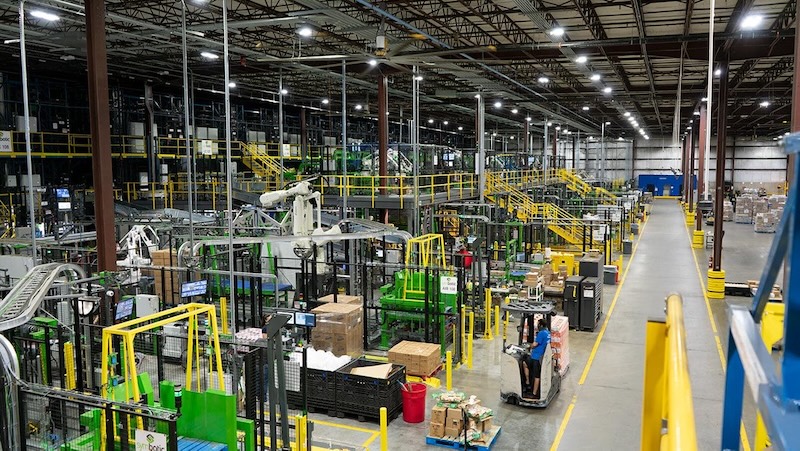
Symbotic's automated warehouse combines its robotics and software with Rockwell Automation integration, per a Putman Media feature.

Logistics Viewpoints analyzes Walmart's warehouse automation with Symbotic as a network-wide strategy rather than a single-site project.

Walmart expands its Symbotic warehouse automation agreement to 25 distribution centers in a $6B deal.

Symbotic and Walmart expand their warehouse automation deal to 25 US regional distribution centers, with a $6B commitment.

Analysis of Symbotic's Walmart growth and what it suggests for robotics startups dependent on anchor customers.
Modular end-to-end robotic warehouse automation system leveraging fully autonomous robots and AI-powered software. AI-powered software orchestrates hundreds of autonomous robots using a comprehensive proprietary software architecture with controls layer, routing-tasking algorithms and data analytics integrated with customer WMS. Robotic arms equipped with computer vision and proprietary end-of-arm tools depalletize and optimize cases, with each inbound cell processing 1,700 cases per hour. Bots build optimized mixed-case pallets with industry-leading speed and density. Implemented in modular blocks customizable by case volume, order profiles, and product characteristics. First deployed at Walmart across all 42 regional distribution centers.
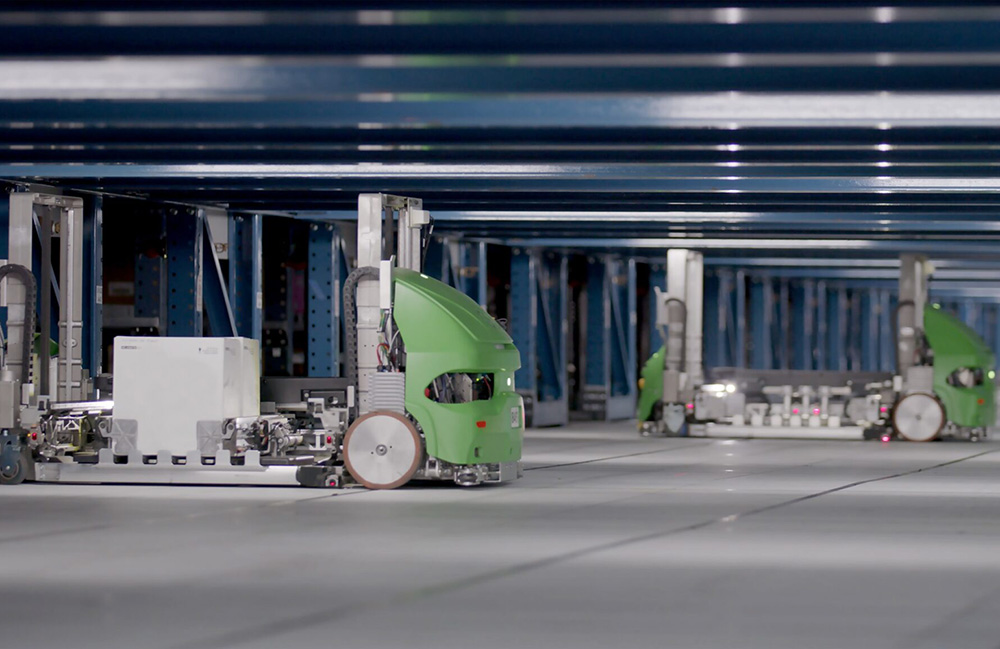
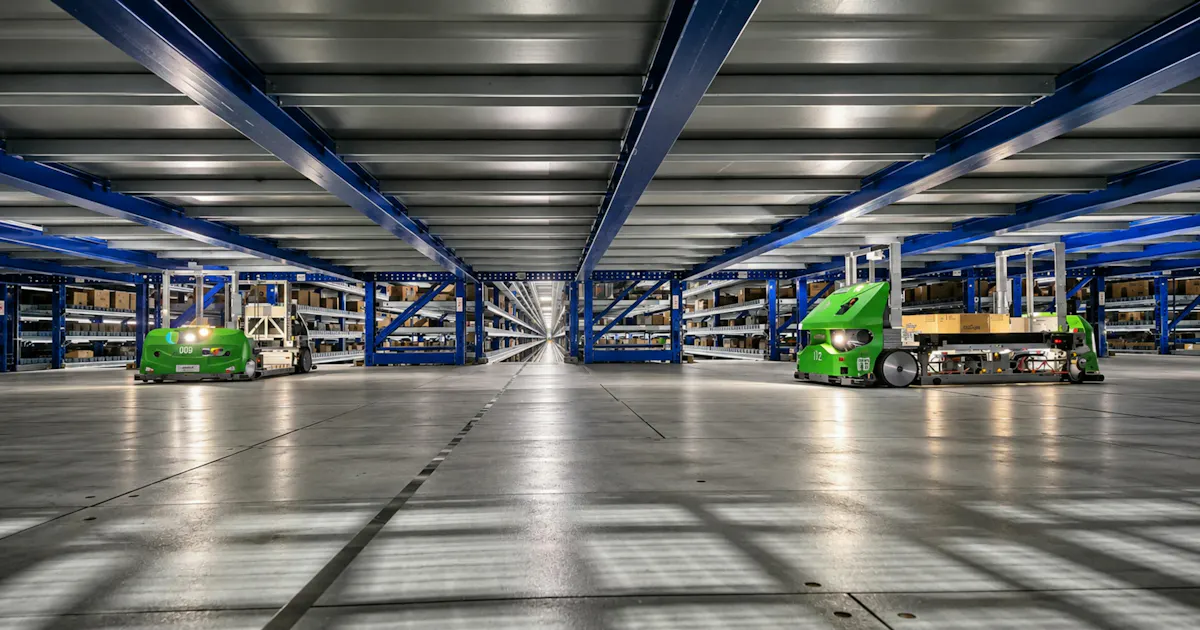
Autonomous mobile robots designed for machine learning with onboard computing power to collect data and flexibly adapt to environment and operational variations. Operating within Symbotic's fleet, the SymBot moves autonomously in response to its environment and performs pick-and-place tasks orchestrated by AI-powered software in synchronization with robotic arms and lifts. Equipped with double wishbone suspension and power casters for high-speed acceleration, turning and stopping, with wheel slip under one degree to handle spills. In a typical system the fleet completes in excess of 15,000 case moves per hour. First deployed at Walmart's Brooksville, Florida distribution center in 2017, the robots are now being deployed across Walmart's 42 regional distribution centers in the U.S.
Warehouse-as-a-service platform built on Symbotic's AI-powered robotics and software technology, deployed in single and multi-tenant facilities to manage supply chain networks with efficiency, SKU agility, and scalability. Joint venture between SoftBank (65%) and Symbotic (35%), established July 2023, targeting the $500+ billion annual warehouse-as-a-service market opportunity. Under a $7.5 billion systems contract with GreenBox, Symbotic will deploy systems across its warehouse network beginning fiscal year 2024 in larger-scale implementations than current installations. Expected to generate $500+ million in annual recurring software, parts, and services revenue once operational.
Commercially available upgrade to Symbotic's core ASRS storage structure, announced August 2025, that reduces customer storage footprint by up to 40% while increasing capacity and throughput. Incorporates enhanced fire suppression and improved seismic adaptability for broader facility compatibility. Enables existing and new Symbotic customers to fit significantly more inventory into fixed real estate—critical as US distribution center construction costs rise.