Marvell (MRVL) is a publicly traded Networking & Custom Silicon company founded in 1995 and based in Santa Clara, USA.
| Date | Stage | Amount | Valuation | Lead investors |
|---|---|---|---|---|
| Jun 27, 2000 | IPO | $90M | — | — |
Marvell Technology reported record Q2 fiscal 2027 revenue of $2.739 billion, up 37% year-over-year, driven by accelerating Data Center segment growth of 46% YoY. GAAP gross margin contracted to 53.1% (58.9% non-GAAP), while GAAP diluted EPS was $0.33 (non-GAAP $0.94). Operating cash flow reached $605.5 million. The company highlighted strong AI-related bookings and significant acceleration in its Custom business starting in H2 fiscal 2027. Management raised full-year guidance for both fiscal 2027 and 2028. For Q3, the company guides revenue of $3.150B (±5%), GAAP gross margin 52.9%–53.9%, and GAAP diluted EPS of $0.53 (±$0.05).
Q3 FY2027 revenue $3.150B (±5%); raised FY2027 and FY2028 full-year outlooks

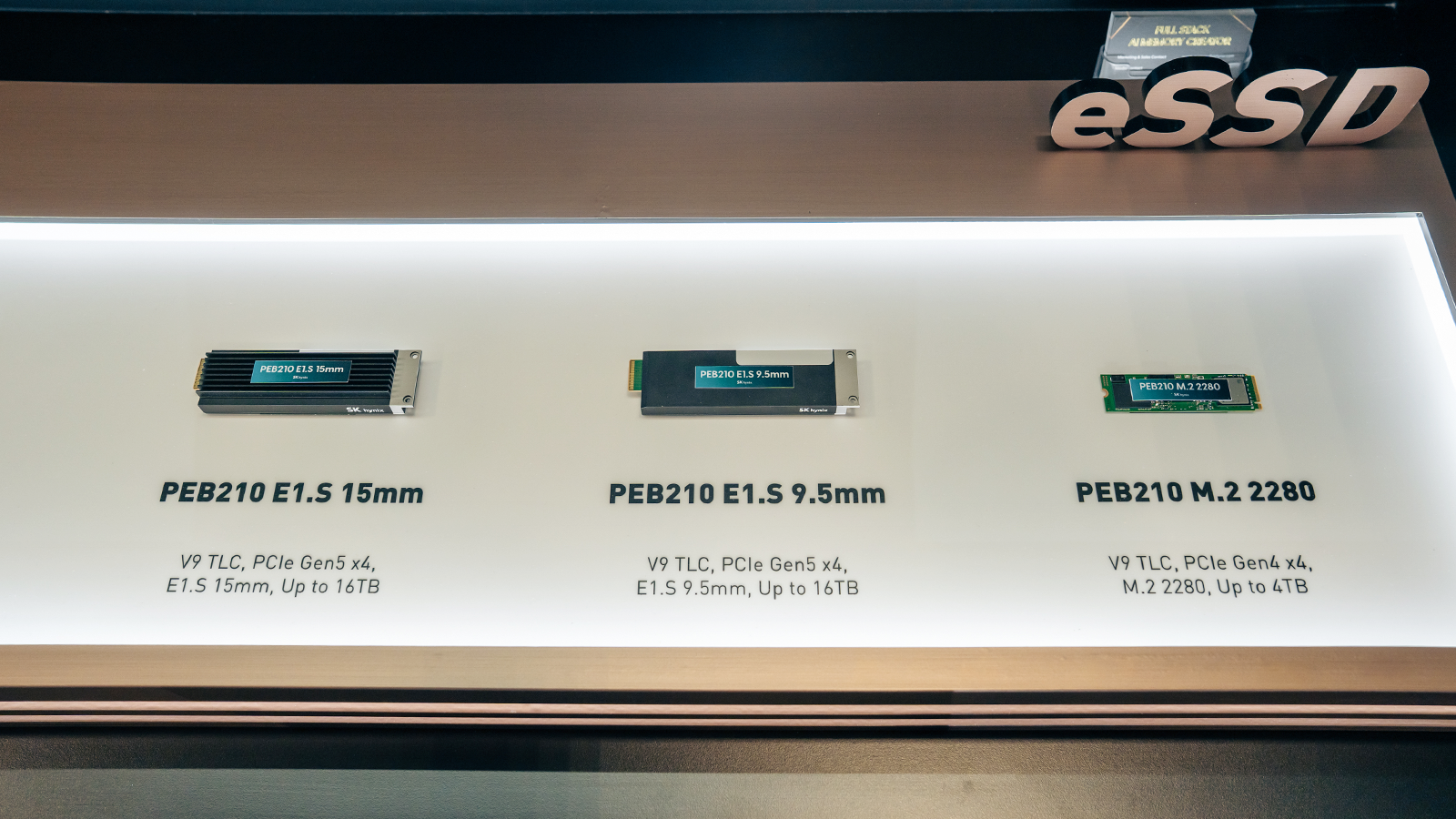
SK hynix details its H-TPU, a small in-order I/O core cluster drawing about 2.5% of a CPU core's power, for future SSD controllers.

AI server and inference spending is growing rapidly, absorbing budget from legacy enterprise IT across multiple tracked chip vendors.
Marvell co-designs custom AI accelerators (XPUs) and compute ASICs for hyperscalers, taking a customer's architecture to silicon on leading-edge TSMC nodes with Marvell's IP for SerDes, packaging, and chiplets. This custom-compute business, anchored by multi-year programs with Amazon, Microsoft, and Google, is Marvell's fastest-growing segment and positions it as the primary alternative to Broadcom for bespoke data-center AI chips.
Marvell's optical-interconnect portfolio, including industry-leading PAM4 DSPs and coherent DSPs that drive the optical modules linking GPUs and switches across AI clusters. As AI training scales out, bandwidth between accelerators becomes the bottleneck, and Marvell's electro-optics, spanning 800G and 1.6T, are central to the high-speed connectivity fabric of modern AI data centers.
Marvell's high-radix data-center Ethernet switch silicon, such as the Teralynx 10 (51.2 Tbps), built for low-latency AI and cloud networking. As hyperscalers push Ethernet as an open alternative to proprietary interconnects for AI fabrics, Teralynx competes with Broadcom Tomahawk and Nvidia Spectrum to move traffic between thousands of accelerators at the top of the rack and across the spine.