Nvidia (NVDA) is a publicly traded AI Accelerators company founded in 1993 and based in Santa Clara, USA.
| Date | Stage | Amount | Valuation | Lead investors |
|---|---|---|---|---|
| Jan 22, 1999 | IPO | $42M | — | — |

Microsoft releases Project Zenith, a stripped-down Windows 11 for AI developers, debuting on AMD's Ryzen AI Halo platform and requiring 64GB+ RAM with 250GB/s bandwidth.

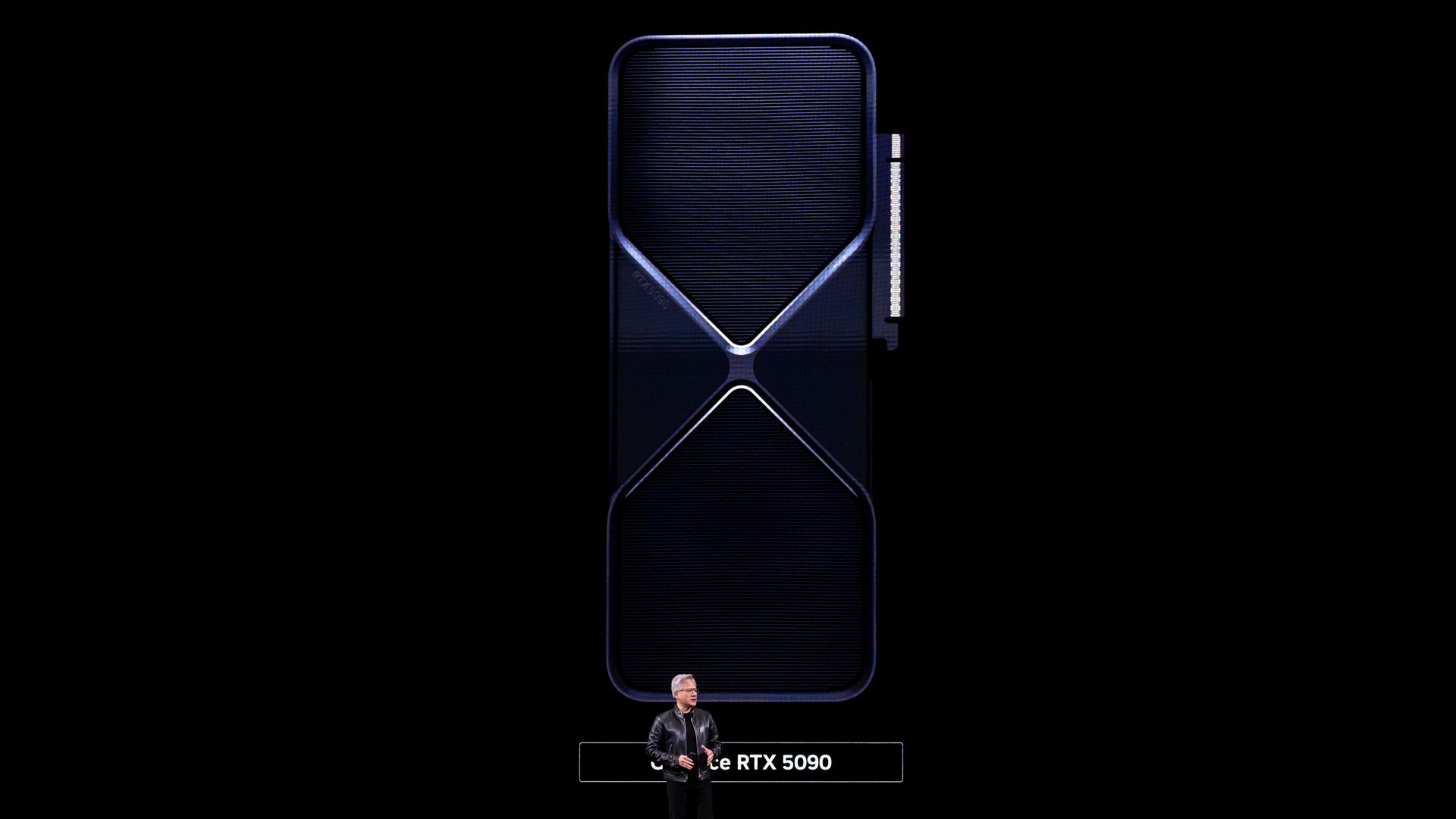
Nvidia sells RTX 5090, 5080, and 5070 Founder's Edition GPUs at MSRP in-person at PAX West.

At IFA 2026, Nvidia teases October RTX Spark launch and AMD unveils Ryzen AI Max+ Pro 495 devices with up to 192GB unified memory.

A modder gets Nvidia's DLSS 5 running on AMD RDNA 4 GPUs via a dynamic wrapper, with roughly 30 FPS at 1080p on the RX 9070 XT.

DLSS 5 debuts in NBA 2K27; runs on all Blackwell RTX 50-series cards at 1080p with a performance hit but noticeably improved visuals.

Nvidia launches DLSS 5 in NBA 2K27, exclusive to RTX 50-series for now, with RTX 40-series support promised later.
Nvidia's flagship data-center AI GPU architecture, the B200 packs 208 billion transistors across two reticle-limited dies fused into one chip via a 10 TB/s NV-HBI link. The GB200 Grace Blackwell Superchip pairs two B200 GPUs with a Grace CPU. Sold as the GB200 NVL72 rack-scale system connecting 72 GPUs over fifth-gen NVLink into a single coherent compute domain, it targets trillion-parameter LLM training and real-time inference for hyperscalers and AI labs.
The Hopper-architecture H100, and its higher-memory H200 successor, became the de facto standard for frontier model training and inference. The H100 offers fourth-generation Tensor Cores, a Transformer Engine with FP8 precision, and 3 TB/s HBM3 bandwidth; the H200 adds 141 GB of faster HBM3e. Connected via NVLink and deployed in DGX/HGX systems, these GPUs powered the bulk of large-language-model compute through 2023-2024.
Nvidia's parallel-computing platform and programming model, CUDA is the software moat underpinning its hardware dominance. It exposes GPU parallelism to developers through C/C++/Python and a vast library ecosystem (cuDNN, cuBLAS, TensorRT, NCCL) that virtually every AI framework targets. The accumulated software lock-in, more than raw silicon, is widely cited as Nvidia's most durable competitive advantage in AI compute.
120 patents on file, but none with both an extractable figure and an abstract on Google Patents yet.