Including Funding rounds, Bull / Bear thesis, Stock + earnings, Roster changes, Patents, News, and Open roles.
Already subscribed? Sign in →
Brian Manning earned a bachelor's degree in mechanical engineering from the Milwaukee School of Engineering and a master's in aerospace engineering from Stanford, where he was a student researcher in the Space Systems Development Lab, and later an MBA from London Business School. He spent two years at SpaceX as the responsible engineer for the thrust structure before turning to navigation technology. In 2019 he co-founded Xona Space Systems with a group of engineers who had met in Stanford's aeronautics and astronautics department, and as CEO he leads the company's effort to build Pulsar, a low-Earth-orbit constellation delivering precise, jam-resistant positioning, navigation, and timing as a GPS alternative.
Tyler Reid earned a B.Eng. in mechanical engineering from McGill and an M.Sc. and PhD in aeronautics and astronautics from Stanford, where he worked in the GPS Research Lab and later co-taught the graduate GPS course. Before Xona he was a research engineer on Ford's controls and automated-systems team working on localization and mapping for self-driving cars, and earlier a software engineer on Google Street View. He co-founded Xona Space Systems in 2019 with fellow Stanford-trained engineers, and as CTO leads the technical development of the Pulsar PNT constellation aimed at delivering resilient, high-precision navigation independent of legacy GPS.
No articles ingested yet for Xona Space Systems. Once the hourly news pipeline is live, every article the classifier tags as mentioning this company appears here with its one-line AI summary and sentiment.
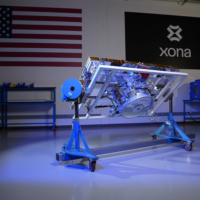
Pulsar is Xona's planned low-Earth-orbit constellation (full build-out of around 258 satellites) that broadcasts dedicated positioning, navigation, and timing signals. Because LEO satellites are far closer than GPS spacecraft, Pulsar delivers signals up to hundreds of times stronger, enabling centimeter-level accuracy and stronger resistance to jamming and spoofing. The service is designed to augment or back up GPS for autonomous vehicles, aviation, defense, and critical infrastructure that need resilient, high-precision timing and location independent of legacy government navigation systems.
6 patents on file, but none with both an extractable figure and an abstract on Google Patents yet.
We don't have a live feed for this company's ATS. Their careers page has every open role.
View all careers ↗